
Is Moral Knowledge Possible?
A response to Philip Goff

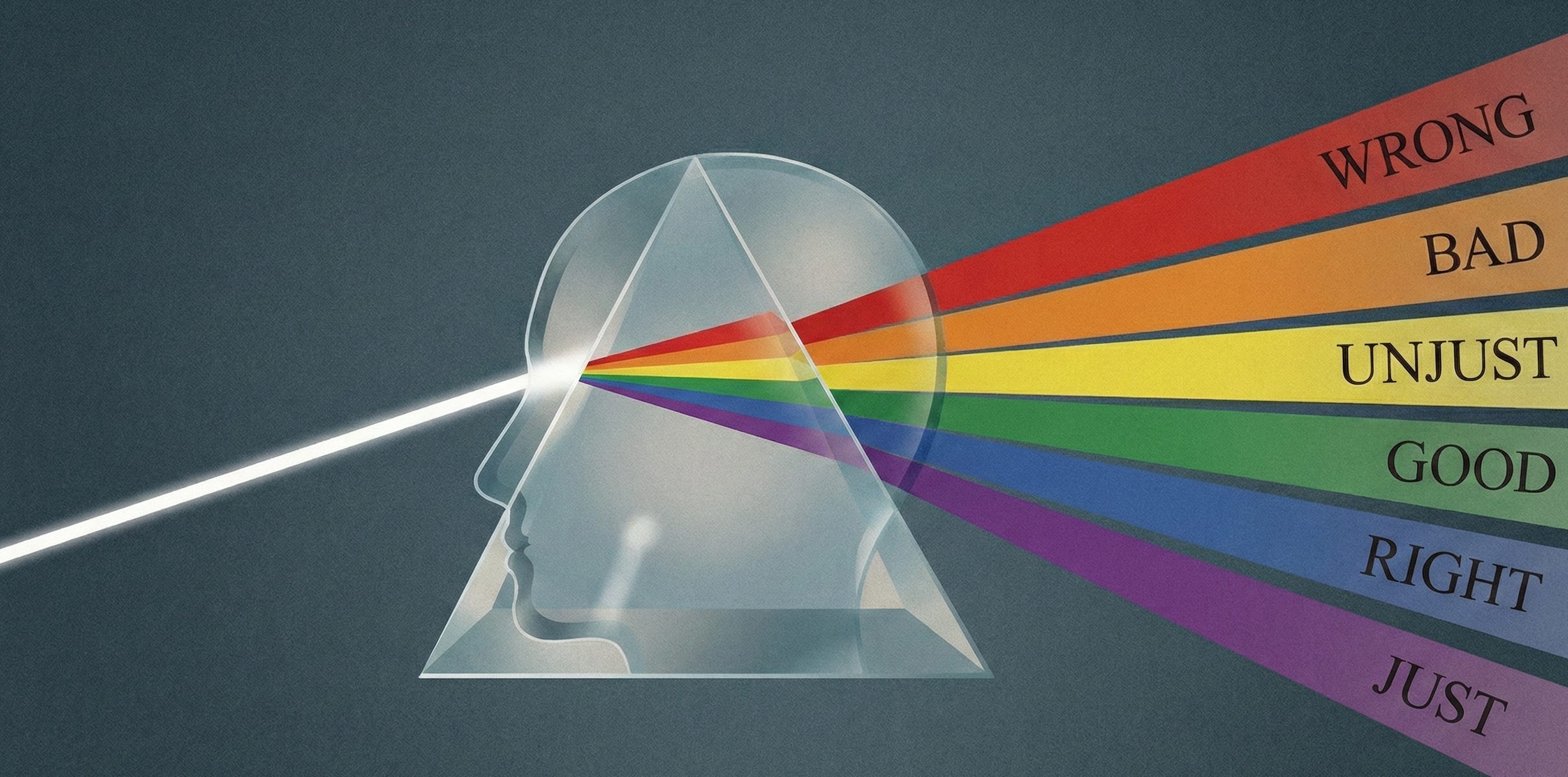
Moral realists are having a moment. After decades of mockery under the scientism of the 21st century, moral realists can once again hold their heads up high. Indeed, if we ask philosophers today, 62% identify themselves as some kind of moral realist.
But the one and only Philip Goff is pouring cold water on the enthusiasm. In a recent blog post, he laments the fact that his fellow realists do a lot of handwaving when asked about moral knowledge.
You see, realists come in two flavours, natural and non-natural. The natural ones think we can get moral knowledge using the tools of science. Moral facts are, after all, natural facts by their reckoning. They’re wrong, of course, because of the is-ought gap.
(They probably won’t like that I’ve just dismissed their view in one line. But I don’t care. My argument here is aimed at the non-naturalists).
Goff is of course concerned with his fellow non-naturalist realists. These fine folks believe that moral facts are not part of the natural order. They don’t causally interact with the world and you can’t measure them. Non-naturalists believe you can only know these facts from reflection. Your intuitions about right, wrong, good, and bad give you some (defeasible) evidence about these facts.
But Goff worries that this cries out for an explanation that has yet to be provided. He points out that if moral facts don’t causally interact with the natural world, then how can they shape our beliefs?
The worry is that unless the moral fact that wearing crocks is wrong shapes our belief that wearing crocks is wrong, we can’t be justified in believing that wearing crocks is wrong (even though it obviously is).
I think Goff makes a good point. And as a card-carrying member of the non-natural realist club, I’ve felt compelled to give him an answer. So in this article, I’m going to give an argument for moral knowledge.
(For my loyal readers, this article will be a little different than what I usually post. I usually try to avoid technicalities in favour of the big picture. But this article requires some old fashioned argumentation. So even though I’ve tried to keep this accessible, the level of precision required means this article will feel a little different.)
What we can know from experience
In his excellent work on consciousness, Goff develops an argument that I want to riff off of. Goff begins by drawing a line between transparent and opaque concepts.
Transparent concepts: concepts that reveal the essence of the referent to anyone who grasps them.
Opaque concepts: concepts that do NOT reveal the essence of the referent to anyone who grasps them.
(An essence if a list of properties that jointly define what it is to be that object.)
A triangle is a transparent concept. The concept of a triangle refers to any closed object composed of three straight lines. Simply by knowing this concept, you know the essence of a triangle. You can figure out that the internal angles of a triangle must sum to 180 degrees just by thinking.
Water is an opaque concept. Simply knowing the concept of water doesn’t mean you can figure out that water is essentially H2O. That requires scientific investigation.
This distinction in hand, Goff argues our phenomenal concepts are transparent. Roughly, his argument begins with the Cartesian thought that I can be virtually certain of my direct, immediate experiences.
When I step on a Lego brick, I feel the sensation of blinding pain. Is it possible for me to doubt that in that very moment, I am feeling pain? Goff thinks I can’t. In his words, I’m super justified in believing there is pain going on. This belief is super justified because I know it with the same level of certainty that I know 2 + 2 = 4 (at least in the moment).
This is a little odd. What could possibly explain the fact that my phenomenal beliefs are super justified?
Goff’s answer is that super justification is best explained by transparency. If the whole nature of pain is present in your experience (because pain just is that experience), then you grasp the nature of pain once you grasp the concept. So, phenomenal concepts are transparent to us.
Experience of value
Suppose we accept Goff’s argument for the transparency of phenomenal concepts. If so, then once I grasp the concept of pain, I know the essence of pain. So what?
Well, notice that pain is not neutral, pain is bad. Badness is a negatively valanced normative concept. To say that something is bad, is to say you have reason to avoid it. When I stub my toe, I immediately recognise the badness of my pain.
What’s more, if I think about different scenarios with similar pain, I get the intuition that these experiences of pain would be bad too. Indeed, I can’t think of a single possible world with pain like this in which I don’t see its badness.
Now what explains these intuitions? I think the best explanation is that badness is part of pain’s essence. In other words, badness is part of what it is to be in pain. This explanation works if you already accept the transparency of phenomenal consciousness. For if I have introspective access to the essence of pain and badness is one of pain’s essential properties, then I can know something about badness. And if badness is part of pain’s nature, then I can explain why pain is bad in all possible worlds. Therefore, we can have moral knowledge of some moral facts (the badness of pain) because (i) badness is part of the nature of pain; and (ii) we have introspective access to the nature of pain because it is a transparent concept.
Generalising the lesson
The argument above was illustrated with the example of pain, but it applies more generally.
For example, I know what it’s like to feel love for someone. I also know that love is necessarily good. The argument above explains why. I know the nature of the feeling of love because the experience of love is a transparent concept. I know it’s good because goodness is one of love’s essential properties.
More generally, I can know the essences of my phenomenal experiences. Some of those experiences, like love and pain, have normative properties as part of their essences. Therefore, I can know some normative properties.
This doesn’t get me moral omniscience. Nor do I have an exhaustive account of which experiences have essences containing normative properties. But this argument does explain how moral facts like the goodness of love or the badness of pain can shape our beliefs. So, this argument should provide an adequate response to Goff’s misgivings.
Terms and Conditions
This argument won’t convince anyone to become a moral realist. But so what? The argument isn’t even trying to do that. Its aim is to show how moral knowledge is possible, not to convince sceptics.
Also, one might object that this argument strays too close to naturalist realism. I don’t see why. Most naturalists would deny that essences are part of the natural world. And even if some essences are natural (like the essence of water being H20), that doesn’t mean all essential properties are natural. Again, one can coherently maintain that badness is a non-natural property and that it is an essential property of pain.
Thanks for reading til the end! By the way, do you know how the substack algorithm works? You see it recommends you content based on what you like, restack, and especially on what you subscribe to.
That means that if you like this article, and you wish substack would recommend more like it, then you have objective stance-independent reasons to subscribe to The First Principles Project, like this article, and restack it.
Does that conveniently help me in a way that makes you sceptical? Absolutely! But I’m telling the truth. Google it if you don’t believe me.
Greetings Dr. Elijah!
Thanks for an interesting article. I agree with some of the other comments that there is a contingency problem with grounding knowledge at the phenomenological level. Pain after all is just information with a proper-function. If we add a utilitarian/consequentialist layer to this conversation, then pain can be a contingent-good that motivates a free-agent to remove their hand from a hot-stove, thus motivating the prevention of a permanent injury.
By sending a warning through the physical nervous system, pain can be a great-good in that it preserves the integrity of the organism. Might “integrity” and “disintegration” be a more cogent paradigm through which to understand modifiers like “good” and “bad”? This question is something that I’m researching in my own PhD work.
Where does integrated-information ultimately come from, and why is it ordered in such a way that it bucks entropy and motivates the preservation of human integrity and being?
Here’s what I’m trying to get at. There’s an epistemological regress that is begged if we try to ground knowledge at the phenomenological level. We have to go deeper—to the teleological level—and then even deeper, to the ontological level. We need a locus for objective human-meaning simpliciter, not just for our subjective moral-knowledge.
Thus, I think any satisfactory ground for moral-knowledge must take Kierkegaard’s leap and move beyond intuitional non-naturalism to a robust ontological supernaturalism. We need a foundation of the Good that is not bound to the law of entropy. I’m not satisfied by either Goff's panpsychism or Moore’s intuitionism on this basis—and I can see no other consistent solution to the ‘is/ought’ and Euthyphro problems either.
Life itself bucks Schrodinger’s paradox (entropy), and all conceptions of the Good concern a properly integrated human-life. Thus, I cannot as yet see a more satisfying explanation of moral facts than the Natural-Law theory that human-beings are contingently analogous to their Creator—The Morally Perfect-Being (Anselm).
What a non-naturalist would call moral-intuition; I call conscience and moral reason with a veritable taproot into the Divine-Life (C.S. Lewis contra David Hume in: Miracles).
In any case, any realist-theory of moral-knowledge must supply a satisfying ontology for moral-facts. Facts are the substance of knowledge (Aristotle). Moral facts are required to ground a “justified true-account” (Theaetetus) of any rational interpretation of the phenomenological that rises to the definition of what we call “knowledge.”
I would enjoy an article from your non-naturalist moral-realist perspective that attempts to ground moral-facts.
I really enjoy your work. Please keep it up!
JMH
First off, I really enjoyed your post. I recently wrote a post about how I think we can have moral knowledge through experience despite the fact that I think that we don’t have direct access to value through experience.
I think the badness of pain is a good counter example, but I don’t think it should be generalized further than that.
I think you should check out my post on the illusion of experienced value. It would be fun to see your thoughts.